Nobody sits down hoping to play 12 big blinds, but that’s where most tournament lives get decided. The mistake isn’t getting short — it’s treating “short” as a single state with a single strategy. There’s a real difference between 14 blinds and 7, and the players who ladder understand it.
Start with the stack-depth tiers. Under about 8 big blinds, you’re genuinely in shove-or-fold territory, and the charts are close enough to solved that memorizing ranges by position is free EV. Between 8 and 15, though, blind-shoving throws away your best weapon: fold equity you can apply twice. A 2.2x open from the cutoff at 13 blinds leaves you a shove-sized stack behind and forces opponents to play a raise-or-fold game against you. Limping and min-raising your whole range from the small blind at 12bb is also legitimate, and most live players have no answer to it.
The second adjustment is opponent-dependent. Nitty tables reward more opens, fewer shoves. Tables full of loose callers reward the opposite — jam your strong hands, abandon the marginal suited connectors that need folds to work. Position matters more than card quality here: ace-rag from the button beats king-queen from under the gun at 11 blinds nearly every time.
Then there’s ICM, the thing that punishes reflexive aggression near the money. Watch any deep run and you’ll see this in practice. At the 2026 WSOP Main Event final table in July, Evagoras Evagorou came in as the short stack while Lucas Jumalon sat on the chip lead — the correct short-stack strategy in that spot bore almost no resemblance to the correct strategy for a player sitting behind a monster stack. Pay jumps distort everything. When three shorter stacks are about to bust, folding queens is occasionally right.
If you want to go deeper, the endgame material in Kill Everyone by Lee Nelson and Tysen Streib remains the cleanest treatment of push-fold equity and bubble factor written for humans rather than solvers.
With WPT Australia running at The Star Gold Coast through the end of September, plenty of people will get a chance to test this. Most will jam blind. Don’t be most people.
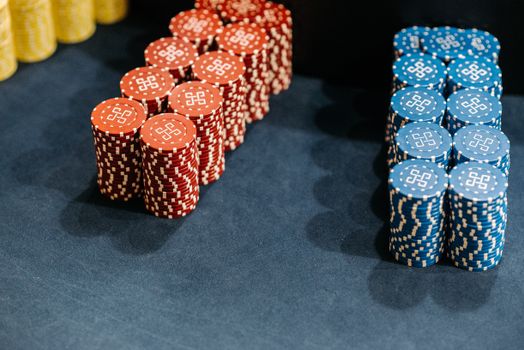
Photo by Pavel Danilyuk on Pexels
Comments
3 responses to “Short-Stack Poker Survival: Beyond Blind Shoving”
[…] than most beginners expect. By level four you’re often playing 15 big blinds or fewer, where the difference between shove-or-fold and a considered small raise is most of your edge. Learn push-fold charts cold, then learn where to deviate from them against […]
[…] precisely when stacks get shallow and every decision is worth the most — which is exactly why short-stack decisions need to be automatic before you add volume, not improvised at 4x […]
[…] every orbit. Sub-15-big-blind play is a different discipline with its own logic, closer to the short-stack framework than to anything resembling final-table caution. Waiting for a hand while the blinds eat you is a […]