Category: Uncategorized

  • Reading Bet Sizing: What Small and Large Bets Mean

    Reading Bet Sizing: What Small and Large Bets Mean

    Han Feng looked down at two aces at the biggest final table of the year, raised to six million, and never got the chance to play a hand of poker. Lauri Saaskilahti made it fifty million with pocket nines, Greg Mueller folded jacks, and Feng got the rest of his twenty-five million in. That fifty-million number is the interesting part. Feng was covered many times over. A raise to fifteen or twenty million would have gotten the same stack in.

    Saaskilahti’s sizing wasn’t aimed at Feng at all. It was aimed at Mueller, sitting behind with jacks and a real decision, on a night when every pay jump was worth six figures. The size was a message to the player who still had chips to lose. Feng was collateral. (He also lost the hand, the board running out ten-eight-three with three diamonds, then a jack, then a queen to complete Saaskilahti’s straight, which is the sort of thing that happens when you get it in as a heavy favorite in August.)

    That’s the whole problem with reading bet sizes. A number on the felt is never just a number. It’s a number chosen by a specific person, with specific stacks behind, in a specific spot, and the meaning lives in all of that context rather than in the amount itself. Still, sizing leaks more information than almost anything else at a live table, and unlike physical tells it leaks just as badly online. Here’s what the leaks actually look like.

    What a third-pot bet is really buying

    A small bet is cheap to make and cheap to call, and that symmetry is the key to reading it. Say the pot is $100 and someone bets $33. You call $33 to win $133, so you need to be right about one time in five. Their bluff, meanwhile, only has to fold you out once in four to break even. Neither side is risking much, which means neither side needs a strong reason.

    So small bets are made with wide, messy ranges. That’s not a flaw. On a flop like king-seven-two with no flush draw, the bettor’s hand is usually fine and the caller’s hand is usually not, so a tiny bet is the efficient way to tax everybody. What it tells you is mostly negative information: it argues against a hand that badly wants a big pot, and it argues against nothing at all, since bluffing tiny on a dry board is a poor use of a bluff. Expect middling made hands, strong hands protecting a range, and the occasional trap.

    The exception is the player who small-bets on purpose with monsters because he’s afraid of scaring you off. This player exists in every $1/$2 game in America. Against him the small bet on a wet board is genuinely strong, and you’ll know because his small bets on dry boards come with a shrug and a comment and his small bets on coordinated boards come with silence.

    Be careful not to read a habit as a decision. A player who fires a third of the pot at every flop regardless of texture is not communicating anything, and c-betting every flop is one of the most common automatic patterns in low-stakes poker. You can only read a size if the player is capable of choosing a different one.

    Why the overbet is honest more often than it looks

    Now the pot is $100 and the bet is $150. You’re calling $150 to win $250, so you need to be good 37.5% of the time. Their bluff needs to work 60% of the time to profit. That’s a demanding bar, and it’s why overbets in practice skew stronger than most players expect from the size alone.

    The logic behind a huge bet is that the bettor wants to threaten something the board makes possible. Big sizes belong on boards where one player can have the nuts and the other player essentially can’t. Ace-king-four rainbow after a raise-and-call from the blinds is the textbook case. The preflop raiser has all the ace-king and ace-queen combos; the defender has almost none of them. That imbalance is what licenses the huge bet, and it’s also what tells you when a huge bet is fishy. Someone jamming two and a half times the pot on nine-eight-seven with two hearts, into a caller who could have every straight, has usually talked himself into it.

    Then there’s the size that’s too big for the pot and just right for the stack. Saaskilahti’s fifty million was that. When a player raises to a number that happens to put a specific opponent in an awkward spot, read the stack first and the pot second.

    The turn is where sizing stops lying

    Flop bets are cheap and habitual. Turn bets cost real money, and almost nobody fires a second barrel on autopilot. When the size jumps on the turn, from a third of the pot on the flop to three-quarters after a blank, the hand has usually gotten better or the story has been chosen deliberately.

    Watch for the reverse too. Small flop, small turn, then an enormous river shove is the sequence of someone who was value-betting thinly and then improved, or of someone who gave up on winning cheaply and decided to buy the pot outright. Both exist. What distinguishes them is which cards arrived. A river that completes the obvious draw and triggers a huge bet from a player who had been betting small is a real bluffing spot, and good players know it. A river that bricks every draw and triggers the same bet usually means they got there some other way, and river calls in that spot are where a lot of bankrolls quietly disappear. The instinct to overcall on the river is strong precisely because the pot looks so big by then.

    Reading the player who only owns one size

    Plenty of opponents bet the same fraction of the pot with everything. You can’t read those bets, but you can read the exceptions, and the exceptions are gold. A player who has bet two-thirds of the pot forty times and suddenly makes it pot has told you something enormous, whatever it is. Note it once and you’ll know next time.

    The mirror image is worth watching for in your own game. If you use one sizing on flops, one on turns and one on rivers, you are not unpredictable; you are simply unreadable in a way that also costs you value, because the same amount can’t be right with both a set and a gutshot. Poker’s 1% by Ed Miller builds an entire framework around that idea of matching bet size and frequency. It predates the solver era and holds up anyway.

    When the money distorts the sizes

    Tournament sizing is read differently from cash sizing for one reason: chips won are worth less than chips lost near the money and near pay jumps. That warps what a size means. A big bet from a medium stack into another medium stack, with a desperate short stack at the table, is far more likely to be a bluff than the same bet in a cash game. The bettor knows his opponent can’t call without risking a ladder-up worth real dollars. This is also why folding an apparently strong hand late in a tournament is often correct rather than cowardly.

    It cuts the other way on bubbles. Short stacks who ought to be shoving and instead make a small raise are often extremely strong and hoping for company. And the player who has just doubled up tends to oversize for a lap or two, because a stack that felt enormous a minute ago is making his bets feel small. That’s not a read on his cards. It’s a read on his arithmetic, which is temporarily broken.

    The practical habit is simple to state and hard to do. Before you interpret a size, ask what the size accomplishes against the specific stacks in the hand. Then ask whether this particular opponent is capable of having chosen it for that reason. If the answer to the second question is no, the first answer doesn’t matter, and you’re back to reading the board and the player. If the answer is yes, the number in front of you is the clearest tell you’ll get all night. Feng’s exit is remembered as one of the wildest hands of the 2026 series, but the sizing was the sober part of it.

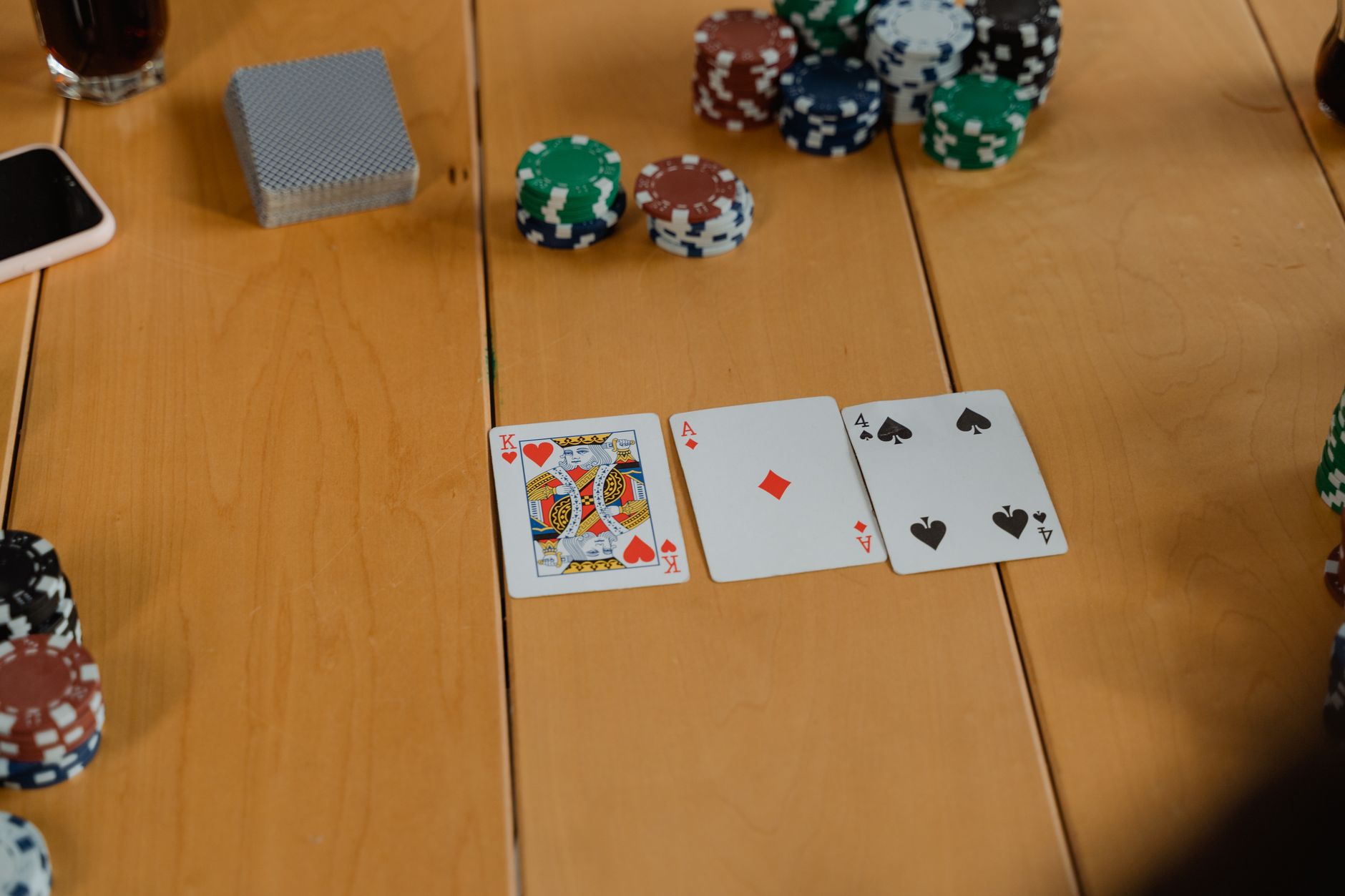
    Photo by Dylann Hendricks on Pexels
  • Why Your Poker Check-Raise Traps Keep Getting Called

    Why Your Poker Check-Raise Traps Keep Getting Called

    From the other side of the table, your check-raise isn’t a threat. It’s a price. Your opponent bet $8 into $14, you made it $30, and now he’s being asked to put in $22 to win $52. He doesn’t have to believe you’re bluffing. He doesn’t even have to think about you at all. He just has to hold something that wins three times out of ten, and top pair with a decent kicker clears that bar against almost anything you could be doing.

    That’s the part that gets lost in the way players talk about traps. “Nobody respects my raises” is a complaint about being called, but getting called is the entire point of a value hand. The real failure is quieter. The trap gets called, the turn goes check-check, and a pot that should have been three streets deep ends up as one raise and a shrug.

    So the question isn’t how to make people fold to your check-raise. It’s why so many check-raises win less money than a plain bet would have, and what separates the ones that print from the ones that just announce your hand at half price.

    What the caller is actually solving for

    Work the odds from his seat. Pot is $14, he bets $8, you raise to $30. There’s $52 in the middle and he owes $22. He needs about 30 percent equity to break even on the call alone. Top pair, weak kicker against a range of sets and two pair is somewhere around 20 to 25 percent. That’s a fold on raw equity. But he’s not against a range of sets and two pair, because nobody has that range, and he knows it.

    Add position. He gets to see your turn action before committing more. Add the fact that you will often check the turn when you have a middling hand, giving him a free card and a cheap showdown. Add the hands you actually raise with that he beats: flush draws, open-enders, second pair that got tired of being bet at. Now his call is comfortably profitable, and it had nothing to do with respect.

    The arithmetic gets worse if you only raise the nuts. You hold a pocket pair roughly once every seventeen hands, and a pair flops a set or better about 12 percent of the time. Run those together and a set-only check-raise shows up under one percent of the time you see a flop. That’s not a strategy, that’s a rumor. Nobody adjusts to a play they’ve seen twice in nine hours, and they shouldn’t.

    The hand you check is the hand you stop making money with

    The hidden cost of a trap is the flop where your opponent checks back. Say you flop top two on a board that misses him completely. You check, intending to raise. He checks behind with ace-high. The turn is a blank, you bet, he folds. You won $14 with a hand that was worth three streets against any pair.

    Estimate how often that happens before you commit to the check. Against a player who bets every flop, checking costs you almost nothing, because his betting frequency does the work for you. Against a thinking regular who bets maybe half his range on a dry board, you’re giving up a street around 50 percent of the time. That’s not a small tax. On a $14 pot where you’d have gotten one call for $10 and another for $25, checking evaporates something like $17 in expectation every time it goes check-check.

    There’s a cleaner way to think about it. Check-raising is not a way to get more money in with a strong hand. It’s a way to build a bigger pot when someone else is willing to put the first chip in. If you have to do the building yourself anyway, just bet.

    Boards where the raise is believable, and where it just isn’t

    The texture question is not “wet or dry.” It’s whose range the board favors, and whether your check-raise tells a story that the board supports.

    Consider a flop of nine-seven-five with two hearts, in a blind-versus-button pot. That board belongs to the caller. You have every two pair, every set, every straight, every flush draw in it. Your check-raise is credible because there are dozens of hands you could have, and your opponent can’t pick which. He also can’t call comfortably with ace-high, because his hand has almost no equity when he’s behind and no easy river.

    Now take ace-king-four rainbow. Same seats. You check-raise. What do you have? Ace-four is nine combinations you’d probably have folded preflop. Ace-king is almost never in a calling range. Sets are three combos each. The board hit the preflop raiser’s range hard and yours barely at all. Your raise is a signal flare, and the correct response from him is to continue with every ace and fold everything else. You’ve turned an unclear situation into a clear one, for free.

    The general rule: check-raise on boards where your range has more hidden strength than his, and bet on boards where his range is strong enough that he’ll pay you for betting. Ace-high flops are for betting into, not raising on.

    Why the turn is where the trap either pays or dies

    Flop check-raise, turn check is the most common way a good spot gets wasted. It happens because raising the flop feels like the move, and by the turn the player is out of plan.

    Run the money through. Pot is $14. He bets $8, you raise to $30, he calls. Pot is $74 going to the turn. A two-thirds bet is about $50. If he calls that, the river pot is $174, and a $120 shove is live against any two pair he holds. That sequence takes $200 off him. The same hand, check-raised and then checked, takes $30 and change.

    That’s the actual reason traps feel unrewarding. It isn’t the flop call. It’s that the flop raise was the whole plan, and no plan existed for the next two cards. Before you raise, name the turn cards you’re betting and the ones you’re checking. If the answer is “I’ll see,” you’re not trapping, you’re stalling.

    Watch how the money moved at the 2026 WSOP Main Event final table back in August. Lucas Jumalon’s first significant heads-up pot against Lauri Saaskilahti came from a raise, a large continuation bet, and a half-pot turn bet, with no pot ever left unbet. He went wire-to-wire from a big lead partly by never letting a street go by for free. That’s a chip leader’s luxury, but the principle scales down: pots get big because somebody kept betting them, not because somebody kept waiting.

    The opponents who make check-raising bad, and the ones who make it free

    Against a player who bets nearly every flop and gives up on nearly every turn, the check-raise is the best tool you own. His flop range is garbage by construction, so your raise folds out a huge chunk of it, and the hands that continue are readable.

    Against a calling station, cut your bluff check-raises to zero and raise value wider than feels sane. Second pair with a good kicker becomes a fine raising hand, because he’ll call with worse pairs and draws all night. The mistake is raising a station and then slowing down when he calls. He calls with everything. His call is not information.

    Against a good, aggressive regular, the problem flips. He’ll float your flop raise in position with backdoor equity and take the pot away on a turn you can’t bet. Against that player, check-raising needs a real bluffing component, and those bluffs need to be hands that pick up equity on lots of turns. Flush draws with an overcard work. Total air does not. For live players building this kind of read work from scratch, the practical framework in The Course by Ed Miller holds up better than most.

    Where the usual advice inverts: multiway pots and short stacks

    Multiway, everything tightens. A flop bet into two players is far more likely to be value, and a check-raise from the first caller is close to the strongest action in poker. That cuts both ways. Your own bluff check-raises should nearly vanish three-handed, and your value raises get called by fewer worse hands. Pot size compensates. Raising a set into two opponents is great; raising a flush draw into two opponents is a way to get called by a better flush draw.

    Short stacks change the question entirely. With 25 big blinds, a check-raise is a commitment, not a maneuver. Raise to a third of your stack and you can’t fold, which means the only real choice is raise-and-call-off or check-call once. In a tournament, the folding half of that decision carries weight beyond the chips, since busting costs more in real money than the chips suggest. Check-raising a marginal hand at 20 big blinds on a bubble isn’t a trap. It’s a coin flip you volunteered for.

    Photo by Qing Luo on Pexels

  • Poker HUD Stats: Which Ones Matter (And Which Don’t)

    Poker HUD Stats: Which Ones Matter (And Which Don’t)

    Open your tracking software and count the numbers sitting on each opponent’s box. If there are more than six, you are not reading them. You are glancing at a wall of digits, picking out whichever one confirms what you already wanted to do, and calling it a read.

    That is the core problem with heads-up displays, the overlays that stick opponent statistics onto the table while you play. They don’t fail because the math is wrong. They fail because almost every number on them is a fraction, and the bottom half of that fraction is usually tiny. A stat built on nine observations tells you about as much as a stranger’s handshake.

    Worth knowing before you spend money on any of this: a lot of rooms won’t let you run it anymore. Partypoker pulled classic tracking overlays back in May 2019 and never brought them back, GGPoker has prohibited them for years, and CoinPoker banned all third-party HUDs and trackers in June 2026, leaving only its own in-client display. PokerStars, 888poker, the Winning Poker Network and iPoker still permit them. Which means the case for learning this material has shifted. It’s less about a live overlay and more about what your own database can tell you afterward.

    The two numbers that do almost all the work

    Voluntarily put money in pot, or VPIP, is the share of hands where a player puts chips in by choice. Blinds posted don’t count. Preflop raise, or PFR, is the share of hands where they raise first in. Every single hand dealt is an opportunity for both, which is why they get reliable faster than anything else on the display.

    Read them as a pair. A player at 22 percent VPIP and 18 percent PFR is playing a tight, aggressive game and raising nearly everything they enter with. A player at 38 and 9 is limping and calling with a wide range, then giving up. That second profile is where your money comes from, and you can identify it inside 40 hands.

    The gap between the two numbers is doing more work than either alone. Under about five points of gap, you’re facing someone who raises or folds. Over fifteen points, you’re facing someone who calls a lot, which means your thin value bets get paid and your bluffs don’t. Against a 40/12 player, betting three streets with top pair and a weak kicker becomes correct in spots where it would be a disaster against a 22/18.

    Third useful number: three-bet percentage, how often they re-raise a preflop opener. It matters for whether you can open light from the cutoff. But it accumulates slowly, and that’s where people get hurt.

    Why the denominator is the only thing that matters

    Say you have 200 hands on someone. Their fold-to-three-bet reads 67 percent. Feels like information. Do the arithmetic.

    They open, say, 12 percent of hands. Across 200 hands they’re in a position to open maybe 60 times, and they actually raise first in maybe 25 of those. Of those 25 raises, you or someone else three-bet perhaps six. They folded four. Four out of six is 67 percent.

    That’s the whole sample. A player who folds to three-bets exactly half the time gets to 67 percent on a six-trial run constantly. It’s roughly the same odds as flipping four heads in six coin tosses, which happens about a quarter of the time. You are not reading a tendency. You’re reading a coin.

    A rough working rule: you want around 30 observations in the denominator before a stat is worth a nudge in your decision, and closer to 100 before you build a plan around it. Even VPIP is coarser than it looks. At 100 hands, the true figure of someone showing 28 percent is plausibly anywhere from 19 to 37. That’s enough to tell a nit from a maniac. It is not enough to tell a 24 from a 30, and nobody should be making different decisions based on that difference anyway.

    The stats with the smallest denominators are, awkwardly, the ones people find most exciting. River check-raise frequency. Squeeze percentage. Fold to turn probe after checking flop as the preflop raiser. These are the numbers that would be genuinely valuable if you had 5,000 hands on the player. At the 300 hands you actually have, they are decorative.

    Fold to continuation bet, split by street

    If you keep one postflop stat, make it fold to continuation bet on the flop: how often a player folds when the preflop raiser fires. It has a reasonable denominator, because someone who defends their blind and faces a bet generates one every time.

    The population number in small-stakes games sits somewhere around 45 to 55 percent. Anyone reading above 65 is a license to bet any two cards on flops that plausibly hit your opening range. Anyone below 35 should turn off your reflex continuation bet entirely with hands that have no equity and no plan. The whole argument for betting less often on the flop rests on exactly this kind of opponent.

    The version of the stat that combines all streets into one figure is worse than useless, because flop folding and turn folding come from different psychological places. Plenty of players fold flops readily and then turn stubborn once they’ve called once. The combined number averages those into a middle figure that describes nobody.

    Same logic applies to went to showdown, the share of hands a player takes all the way. On its own it tells you very little. Paired with won money at showdown, it starts to mean something. High showdown frequency with poor showdown results is a station. Low showdown frequency with excellent results is someone who folds too much and only continues with the goods. Bluff them.

    The stats worth deleting today

    Total aggression factor, the ratio of bets and raises to calls, lumps every street together and gets dragged around by preflop behavior. It has largely been replaced by street-by-street aggression frequency, and even that needs volume.

    Anything measuring a specific line in a specific spot is noise at normal sample sizes. So is anything that looks at winnings by position, which is variance wearing a lab coat. A player’s blue or red number in your positional breakdown after 400 hands reflects whether they held aces once, not how they play the button.

    Automatic color coding deserves particular suspicion. It fires on thin samples and then hardens into a label you stop questioning. PokerStars has specifically gone after these behaviors at the feature level, restricting dynamic updates and auto-coloring rather than banning tracking software outright.

    Four to six stats on the box is plenty: VPIP, PFR, three-bet, fold to flop continuation bet, and a hand count so you know how much to trust the rest. Everything else lives in the popup you open when a decision is actually close, which will be a handful of times per session.

    What tracking software is really for when the overlay is gone

    The rooms that banned HUDs did not ban thinking about your own play. GGPoker supplies hand histories through PokerCraft in anonymized form and permits analysis once you’re done playing. CoinPoker’s rules go further and require prohibited software to be fully closed before the client launches, even on a second monitor. The practical shape of this is simple. Play. Close everything. Import. Then review.

    Your own database is a better teaching tool than any opponent overlay, because the sample problem disappears. After 20,000 hands you know your real continuation bet frequency, your real fold to three-bet, your real win rate from each seat. Those denominators are enormous. If your big blind defense is 18 percent and your three-bet from the button is 4 percent, no confidence interval argument saves you. That’s a leak with a number attached.

    There’s an uncomfortable trade-off underneath all this, and it’s worth naming. Rooms that ban HUDs tend to run softer games, precisely because nobody can hunt for the weak players. Your overlay is a tool for finding fish in a pool where everyone else has one too. Losing it costs you information and hands you a better opponent pool. For most players, that trade is fine. The read you’d have gotten was probably four out of six anyway.

    Photo by Artem Podrez on Pexels

  • Poker Blockers 101: Why Some Bluffs Actually Work

    Poker Blockers 101: Why Some Bluffs Actually Work

    The river card was the deuce of spades, and it completed nothing except a flush that almost nobody was drawing to. Player A shoves with king-jack of hearts, a busted straight draw. Player B shoves the same bet with king-jack where the jack is a spade. Same hand, same story, same sizing. One of those bets makes money over a lifetime of repetitions and the other one doesn’t, and the only difference is a suit marking on a card that never made a pair.

    That’s the whole idea behind blockers. The cards in your hand are not just your hand. They are two cards that your opponent is now guaranteed not to have, and in a spot where his range is narrow, removing the right two cards can meaningfully change what he’s holding. A bluff isn’t good because the story sounds convincing. It’s good because the specific hands that would have called you are less likely to exist.

    Most players learn this backwards. They hear “block the nuts” and start hunting for ace-high flush blockers in every pot, including pots where the flush was never a live possibility. Then they wonder why the bluffs still get snapped off by a middling pair. The useful version of blocker thinking is more careful than that, and half of it is about the cards you want to avoid holding.

    What removing one card does to a range you can actually count

    Say the river brings a fourth spade on a board of K♠ 9♠ 4♠ 2♥ 6♠. Your opponent checks. You’ve got nothing and you’re thinking about a big bet.

    Start by counting what he can call with. Suppose you put him on around 20 combinations of hands that got this far. Maybe 12 of them contain a spade, and of those, three contain the ace of spades. Those three are the hands that cannot fold to any bet you make. The rest of his spades are marginal, and his non-spade hands, kings and nines and pairs, are mostly folding to a large bet.

    Now hold the ace of spades yourself. Those three combinations are gone. You have not made his other hands weaker. What you’ve done is guarantee that the one holding that never folds isn’t in the deck for him. That’s a real, specific effect you can count on your fingers, and it’s the version of blocker logic that actually holds up.

    Compare that to holding the jack of spades instead. You block one weak flush he might have called with, which helps a little. You also block nothing he was ever going to fold with anyway, which costs nothing. It’s fine. It’s just much less than the ace.

    The bet needs to work less often than you think, and blockers move it a few points

    Here’s the arithmetic that keeps this in proportion. Pot is 100. You bet 75. You risk 75 to win 100, so you need folds 75 divided by 175 of the time. That’s about 43 percent.

    Go back to those 20 combinations. Nine of them call, eleven fold. That’s 55 percent folds, comfortably profitable. Now change one card in your hand so that two more of his combinations survive. Eleven call, nine fold. You’re at 45 percent, barely above the line.

    That’s the honest size of the effect. A blocker rarely turns a terrible bluff into a great one. It turns a thin bluff into a clear one, or a clear one into a thin one. When people say their bluff “had blockers,” they usually mean they had a reason to feel good about a bet they were going to make anyway. The reason matters, but it’s worth a few percentage points, not a license to fire into a range that’s calling 70 percent of the time regardless.

    The half everyone forgets: don’t hold the cards he was going to fold

    Blocking his calls is only one side. The other side is unblocking his folds, and it’s the part that separates players who understand the concept from players who’ve memorized the phrase.

    Your bluff only profits when he folds. So you want his folding hands to be maximally available. If your busted draw contains a nine on a board where his most likely fold is a busted pair of nines, you’ve quietly deleted some of your own fold equity. You made it less likely he holds the exact hand you’re trying to push off the pot.

    This shows up constantly on paired boards and on boards with obvious missed draws. A common example: you bluff a river with a hand containing the ten of hearts on a board where hearts missed. Every busted heart draw he might hold is a hand that folds instantly. You just removed one of them from his range. Small effect, wrong direction.

    The practical rule is short. Bluff with cards that block his strongest continuing hands and appear nowhere in his weakest ones. Busted straight draws using low cards on ace-high boards are usually good for this. Hands containing a card that pairs the board are usually bad, because you’re blocking the second-best hand he’d have to let go. You can work most of these out at the table with combination counting and no software at all, which is the same skill behind reviewing hands without a solver.

    The call side, where the same logic gets much harder to trust

    Blockers work for hero calls too, and this is where they get abused.

    The idea is clean enough. If you hold a card that blocks his value hands, more of his range is bluffs, so you can call wider. Back in August, at the 2026 World Series of Poker final table, Lauri Saaskilahti made a river call that had the broadcast audience groaning and a fair number of professionals defending it afterward. Saaskilahti went on to finish second to 22-year-old Lucas Jumalon, the second-youngest Main Event champion in history. The disagreement over that call is instructive. From the rail it looked like a punt. From the perspective of what his card removal did to the other player’s possible value hands, it was defensible.

    The trap is that blocker-based calls depend entirely on your opponent actually having bluffs. Against a strong player balancing his river bets, removing a value combination really does tilt the ratio toward bluffs. Against a $2/$5 regular who has bet the river with a pair or better every time in three hours, his bluff frequency is near zero. Multiply near zero by a favorable blocker and you still have near zero. The call is bad no matter what you hold, and this is the most common way blocker talk turns into a leak at live stakes.

    Where blocker thinking stops paying and starts costing

    Multiway pots are the first place it breaks down. Blockers work by removing cards from one range. When two opponents are still in, the card you hold is being removed from both, but you need both to fold. Your fold equity is the product of two fold chances, and a small nudge to each doesn’t rescue a bluff that was marginal heads-up.

    The second place is any pot where the ranges are wide. Blocker effects scale with how narrow a range is. Against a big blind defense on a low, disconnected flop, his range contains hundreds of combinations and your two cards move almost nothing. Save the analysis for rivers, for three-bet pots, for turns where someone has already shown strength. Narrow ranges are where two cards are a meaningful fraction of the deck.

    The third is stack depth. A blocker that removes his best hand is worth most when the bet is large relative to what he can call comfortably. On a short river bet into a small pot, he’s calling with everything and the ace of spades in your hand is just a card. If you want the full combinatorial treatment of how these effects are calculated, Modern Poker Theory by Michael Acevedo works through it properly.

    And one last thing worth saying plainly. The card you hold can never make a bad bet good against an opponent who doesn’t fold. Blockers are a tiebreaker between two candidate bluffs. They are not a reason to have one.

    Photo by top10-casinosites on Pixabay

  • Do Freerolls Really Build Your Poker Bankroll?

    Do Freerolls Really Build Your Poker Bankroll?

    The lobby of a $50 daily freeroll fills like a subway car at rush hour. Two minutes before the late registration window shuts, the entrant counter is somewhere north of a thousand, and it is still climbing. Fifty dollars, split across roughly the top fifty finishers. First place pays about ten bucks. The number under your avatar says 1,500 chips, and the blinds go up every eight minutes.

    That is the actual proposition, stated plainly, and it is worth stating plainly because the sales pitch never does. Freerolls get described as the on-ramp to a poker career: free entry, real money, no risk, build your bankroll from nothing. The first three parts are true. The fourth is where the arithmetic starts disagreeing with the marketing.

    None of which makes freerolls worthless. They are worth something specific, to specific players, for specific reasons, and the reasons are not the ones usually given. Sorting out which is which takes a little math and a little honesty about what a freeroll field actually teaches you.

    What a freeroll is really paying per hour

    Start with the easy case. ACR runs at least eight freerolls a day, each with a prize pool of $50 or more. Say a typical one draws 1,500 entries. The pool divided by the field gives every player an average equity of about three cents. Three cents. That is not a typo.

    Now assume you are genuinely good, and that a soft freeroll field lets you run three times the average player’s expectation. Your equity is now about ten cents. Getting deep enough to collect it takes two hours, maybe two and a half. You have earned roughly a nickel an hour before you account for the sessions where you bust in level two and earn nothing at all.

    Scale it up and the picture improves but stays bounded. GGPoker’s daily freerolls run from $500 to $10,000, with some series events drawing fields of 200 to 500 players against $2,000 to $5,000 guarantees. Take the friendly end: $2,000 spread over 400 runners. Average equity is $5. A good player might make that $8. Four hours of play to get there. Two dollars an hour, which is real money in a way that a nickel isn’t, but it is still less than you’d make returning bottles.

    The honest version of the bankroll-from-zero pitch is therefore this: yes, it works, and it takes anywhere from twenty-five hours to a thousand to build fifty dollars, depending on which freerolls you can get into. That is not a career path. It is a hobby with a small rebate attached.

    The one structural thing freerolls have that nothing else does

    Here is the counterweight, and it matters more than the hourly rate suggests. Freerolls are the only poker you will ever play where the house takes nothing.

    Every other game skims. A micro-stakes cash table takes five percent of small pots. A $5 tournament charges fifty cents on top. Across a field, that fee is the reason most players lose. In a freeroll, the total money going in is zero and the total money coming out is the prize pool, so the players as a group are collectively ahead. That is an unusual arrangement and it never appears anywhere else in the game.

    The catch is that the entry fee didn’t vanish, it changed currency. You are paying in hours. And hours are the one thing a poker player cannot reload. The question is not whether freerolls are profitable, because in pure dollar terms they cannot be unprofitable. The question is whether your hours are worth more than three cents.

    Why small fields beat big prize pools every time

    If you decide to play them, the selection rule is simple and almost nobody follows it. Stop looking at the guarantee. Look at the ratio of prize pool to entrants.

    A $10,000 freeroll with 8,000 players is worth $1.25 a head. A $100 freeroll restricted to fifty qualified players is worth $2 a head. The restricted ones are where the value hides, and the restrictions are the whole point. Deposit-gated freerolls, loyalty-program freerolls, freerolls that require a password buried in an affiliate newsletter or a Telegram channel. Passwords circulate through promotions pages, opt-in marketing emails, and social feeds, and every hoop between a player and the registration button thins the field.

    Frequency is its own kind of value too. PartyPoker’s Round the Clock freerolls run every hour with modest $20 to $50 pools and no passwords, which makes them nearly worthless as standalone events and genuinely useful as background noise while you play something else.

    And the highest-value freerolls don’t pay cash at all. They pay tickets. A seat into a real tournament with a real field is worth far more than its face value if the tournament is one you couldn’t otherwise afford. Back in 2025, the WSOP Online’s $215 Mystery Millions drew over 53,000 entries for a $10.6 million pool. A satellite ticket into something like that converts your free hours into actual lottery exposure, which is a better use of a freeroll than chasing a share of fifty dollars.

    The strategy is upside down from normal tournament poker

    Two features of freerolls flip the usual advice.

    The first is the field. Nobody folds. There is no money at stake, so there is no pain in calling, and a player who stands to lose nothing will not lay down bottom pair to your three-barrel story. The pressure you normally apply with bets simply doesn’t land. So the adjustment is brutal and simple: essentially stop bluffing in the early levels, widen the hands you’ll bet for value, and let people pay you off. Second pair becomes a value hand. Top pair with a weak kicker becomes a three-street hand.

    The second is the clock. A 1,500-chip starting stack with eight-minute levels means you are down to twenty big blinds by level five whether you win a pot or not. Skill edges need chips and time to express themselves, and freerolls give you neither. Most of the tournament is a shove-or-fold contest, which is the part of poker where a solid player’s advantage over a novice is narrowest.

    Then there is the pay structure, which is the genuinely counterintuitive bit. In a real tournament, the pay jumps near the bubble are large enough that folding a strong hand can be correct to preserve your finish. In a $50 freeroll, the difference between 48th and 30th is about forty cents. Survival is nearly worthless. Chip accumulation is everything. So the right freeroll style is aggressive to the point of recklessness by normal standards, because busting out costs you nothing but the time you get back.

    That last point is the one experienced players miss when they try a freeroll and come away disgusted. They play it like a tournament. It isn’t one. It’s a lottery where the tickets are hours and the correct move is to buy as much variance as you can.

    Who should actually be playing them

    Some players get real value here, and it has nothing to do with bankroll growth.

    Anyone who genuinely cannot deposit. Players in regions where funding an account is difficult, or who have made a deliberate decision not to put money into the game, are in a different calculation entirely. For them the alternative to a freeroll is not a $5 tournament, it’s nothing.

    Anyone learning software. Testing a new client, figuring out how many tables you can handle at once, getting comfortable with a timebank, learning what a site’s hotkeys do under pressure. That is real training and paying for it makes no sense.

    Anyone who needs a reason to sit down. Some people study more when they have skin in something, even an absurdly small something.

    And the exception worth naming: if you have a bankroll and you are playing freerolls to grow it, you are almost certainly leaking money by omission. Four hours in a freeroll for $2 of equity is four hours not spent at a game where your edge actually pays. The player who deposits $50 and grinds the smallest real tournaments will pass the freeroll grinder inside a month, because a $3 event with 300 runners has a $900 pool and the same soft field, minus the players who only showed up because it was free.

    Freerolls are not a scam and they are not a bankroll strategy. They are a rake-free lottery that charges you in time, plays nothing like real poker in the early levels, and occasionally hands out a ticket worth a hundred times what you invested. Treat them as that, and they’re fine. Treat them as a career plan, and you’ll spend hundreds of hours getting where a fifty-dollar deposit would have put you on a Tuesday.

    Photo by Nancho on Pexels

  • The Float Play Explained: Turn Position Into Equity

    The Float Play Explained: Turn Position Into Equity

    Watch what happens two seconds after a continuation bet gets called. The bettor’s hand hovers. The turn card lands, and now there’s a decision that didn’t exist a moment ago, made with a hand that was never planning on a second street of resistance. That hesitation is the whole business model of the float.

    A float is a call made with a hand that is probably behind, from position, with the intention of taking the pot away on a later street. It is not a call because you have odds to improve. It is a call because the person betting into you is doing it too often with too little, and because acting last on the turn and river is worth more than the chips it costs to buy the privilege. You’re not paying to see a card. You’re paying to see what they do next.

    The play has a bad reputation among players who have tried it a few times, lost, and filed it under fancy. That’s usually a selection problem rather than a strategy problem. Floating works against a specific opponent, on specific boards, with specific backup. Get those three things wrong and you’ve simply invented an expensive new way to call.

    Why calling with nothing can be cheaper than calling with a draw

    Start with what you’re actually buying. Someone bets $20 into a $30 pot on the flop. You call $20, making the pot $70. If that player follows through on the turn half the time and gives up the other half, you’re going to be handed a $70 pot roughly once every two hands, for a $20 investment. You don’t need your hand to be good. You need their hand to be bad often enough.

    This is fold equity bought on installment: the share of the pot you win purely because they let go of it, without showdown. The flop call is the down payment, and it’s only worth making if the second payment gets the goods.

    The sneaky part is that a float doesn’t need to win the pot outright to profit. Sometimes they check the turn, you check back, and a low card on the river gives you a pair of fours that’s suddenly good. Sometimes they check the turn, you bet, they call, and you check the river and lose. That’s fine. The play generates money from several directions at once: pots taken immediately, pots taken later, and the occasional hand that improves into a real one because you didn’t fold it.

    The boards where the flop bettor is bluffing and knows it

    Board texture decides most of this before anyone’s personality enters the picture. The flops that make floating profitable are the ones where the preflop raiser’s bet is mostly automatic rather than informed.

    Middling, connected, low boards are the classic target. Nine-eight-six with two hearts. Seven-six-five rainbow. The preflop raiser’s hands are heavy on big cards and pairs that this board threatens. When they fire, a large slice of that betting range is ace-king and ace-queen with nothing. More importantly, their own hand is uncomfortable. A turn card that pairs the board or completes an obvious straight or flush shuts them down. You are floating into a range that has a lot of surrender in it.

    Dry ace-high boards cut the other way. Ace-seven-two rainbow is where the raiser’s range is strongest and where a small bet is cheap and correct for them. There’s no turn card that scares them and few they can’t keep betting. Floating there is calling to see if they get bored, and good players don’t.

    Paired boards sit in the middle and reward attention. King-king-four is a board where neither of you has a king most of the time. Whoever is willing to keep representing one usually gets it, and the player in position gets to be that person at a discount.

    The turn is where most of the money gets decided

    Here’s the arithmetic that actually matters, done slowly. Blinds are $2/$5. You call a $15 open on the button with jack-ten of clubs. The flop is nine-five-two with one club. They bet $20 into $37. You call.

    The pot is $77 going to the turn. The turn is a queen of spades. They check.

    Now you bet $45. They need to fold about 37 percent of the time for that bet to break even with zero equity, and you have far more than zero. You can hit a jack, a ten, a king, or an eight and often be good. Call it fourteen cards that improve you to something playable, plus every hand where they simply have ace-high and give up.

    Against a typical opponent, that queen is one of the worst turn cards imaginable. It hits your range hard and theirs barely at all. They checked, which already removed most of their strong hands. A fold percentage well north of 50 is realistic. The bet doesn’t need to be clever. It needs to be the second half of a plan you made on the flop.

    Compare it to a turn that bricks: the four of diamonds. They bet again, $55 into $77. Now you’re being asked to invest again with nothing, with no card that scared them, and the correct response is usually to shrug and fold. That’s not a failed float. That’s the float working as designed. You paid $20 for an option and the option expired worthless. Options do that.

    Backup equity is what separates a float from a donation

    The hands that float well are the ones that can win without a bluff. Two overcards to a low board. A gutshot straight draw. A backdoor flush draw, meaning you’d need running cards of the same suit, which is thin but not nothing. An ace with a bad kicker that could pair up.

    Jack-ten on nine-five-two is a fine float. Seven-four offsuit on the same flop is a fold, even though the story you’d tell on the turn is identical. When the bluff doesn’t work, one hand still has outs and the other has none. Over a thousand repetitions that difference is most of the edge.

    There’s a second reason to prefer hands with some connection to the board. They give you a reason to keep betting on the river, and they give you a reason to stop. With nothing at all, every decision on the river is a coin flip between giving up and firing into a range you’ve already narrowed.

    The opponents worth floating and the ones who will eat you

    The perfect target bets almost every flop as the preflop aggressor and then goes quiet. You can spot them without software. They fire the flop, check the turn, and fold to a bet, over and over. Players who are still betting every flop out of habit are handing you this play for free.

    The wrong target is the player who bets the flop selectively and follows through on the turn nearly always. Against them your flop call is buying an option that never pays. Fold more, raise more, float less.

    Also wrong: multiway pots. Floating works because one player has to survive your aggression. Add a second caller and your turn bet needs to get through twice. The frequency you need climbs fast and your weak holding is much more likely to be beaten outright.

    And be honest about stack depth and format. In a tournament with 25 big blinds, a float costs a fifth of your stack and leaves you no room to apply pressure on the turn. The play needs depth. It’s a cash game and deep-stacked tournament tool, not a short-stack one. The chapters on postflop aggression in The Grinder’s Manual by Peter Clarke lay out that dependency clearly.

    One last mechanical note. Float with hands you’d be uncomfortable raising. The flop raise and the flop call should carry different parts of your range. If you raise every good draw and float every bad one, an observant opponent eventually notices that your calls are all air. Mix in the occasional strong hand that you’re slow-playing, and the whole structure holds together.

    Photo by quinonesnaomy on Pixabay

  • Moving Up in Stakes: Real Signs You’re Ready

    Moving Up in Stakes: Real Signs You’re Ready

    The floor staff at any midsize card room can predict who’s about to ask for the $2/$5 list. It’s rarely the player who’s been quietly grinding $1/$3 for eight months. It’s the one who just stacked a tourist in a three-bet pot, has $1,400 in front of him on a $300 buy-in, and has started saying “this game is nitty” out loud. He racks up, walks eleven feet to the bigger game, and sits down with the whole rack. Sometimes it works out.

    The move that actually sticks looks nothing like that. It’s usually preceded by weeks of being bored at the lower game, a bankroll that hit its number and then kept going past it, and a first session at the new stake that felt strangely uneventful. Nobody tells a good story about it afterward, because nothing happened. That’s the point.

    What follows is the difference between the signals that mean something and the ones that only feel like they do. Some of them are arithmetic. Some of them are about the money in your pocket rather than the chips on the table. And a few of the standard rules are wrong often enough to be worth arguing with.

    Why the bankroll jump is steeper than the stakes jump

    The usual guidance for live cash is somewhere between 20 and 30 buy-ins for the stake you’re playing, more like 40 to 50 for online, where you’ll see far more hands per hour and the swings compress into less calendar time. Fine. But players do the multiplication wrong, because they compare the blinds instead of the buy-ins.

    Here’s the arithmetic. At $1/$3 with a $300 max buy-in, 30 buy-ins is $9,000. The blinds at $2/$5 are not quite double. The standard buy-in, though, is usually $1,000 or more, and the effective stacks run deeper because good players sit with more. Thirty buy-ins there is $30,000. You didn’t need 67 percent more money. You needed three and a third times as much.

    That gap is why so many shots get taken on 10 or 12 buy-ins, and why the shot ends the way it does. Twelve buy-ins is not a bankroll, it’s a countdown. A perfectly good winning player at $2/$5 will have a losing stretch of six or seven buy-ins without doing a single thing wrong. On twelve, that stretch is an existential event. You’ll start playing it like one around buy-in number four.

    There’s a second bankroll nobody counts, which is the rest of your life. If moving up means the poker money and the rent money are now close enough in size that you can see both from the same spot, your roll is too small regardless of what the buy-in count says. Scared money isn’t a personality flaw. It’s a rational response to a real stake, and the only fix is more separation between the two piles.

    The win rate you think you have, and the one your sample supports

    Online players have a number, and the number lies to them. Win rate is measured in big blinds won per 100 hands. The trouble is the noise around it. The spread of results in a typical no-limit game runs around 90 to 100 big blinds per 100 hands, which is enormous relative to any edge a human actually has.

    Run it out. Say you’ve played 100,000 hands and you’re up 5 big blinds per 100. That feels like a real, established win rate. The margin of error on that sample is roughly plus or minus 6. Your true win rate is somewhere between barely breaking even and crushing. You have proof you’re probably not a loser. You have no proof at all about how big a winner you are.

    Live players have it worse, and usually don’t realize it. You see about 30 hands an hour at a full live table. That same 100,000 hands takes over 3,000 hours. At 15 hours a week that’s four years, during which the player pool, the rake and your own game have all changed. There is no live sample that settles the question. Anyone who tells you their live win rate to one decimal place is reporting a feeling.

    So use the sample for what it’s good for. It can tell you that you’re not losing. It cannot tell you you’re ready. The readiness evidence has to come from somewhere else.

    Better evidence than results: what you can actually see at the table

    The strongest sign is that you’ve stopped learning anything at your current stake. Not that you’ve stopped losing pots. Specifically: you can name the tendencies of five regulars in your game without thinking, you know which two of them fold too much to a river raise, and you’re adjusting against them before the hand starts. The game feels solved not because it is, but because your read rate has outgrown it.

    The second sign is unglamorous and easy to test. Can you make the same decision when the numbers get bigger? Take a thin river call you’d make for $120 into a $400 pot. Now it’s $400 into a $1,300 pot. Same board, same opponent type, same reasoning. If your hand slows down on the way to the chips, your bankroll has not caught up to the stake, whatever the buy-in count says.

    The third is about volume rather than edge. Almost everyone plays worse at the higher stake at first, simply because more decisions are close and more opponents are thinking about you. Online, that means cutting your table count, and most players cut it nowhere near enough. If four tables was comfortable at $0.25/$0.50, two is a reasonable starting point a level up. The multi-tabling math rarely favors adding tables and stakes at the same time.

    The move-up that’s really a rescue mission

    Then there’s the version that has nothing to do with readiness. You’re stuck $900 over three weeks. The bigger game is running. Playing it for two hours would square everything.

    This is the single most expensive thought in poker, and it’s recognizable by its shape. Notice that the reasoning contains no claim about your edge. It’s entirely about the size of the hole and the speed of the ladder out. A player moving up for the right reasons is thinking about opponents. A player moving up to get even is thinking about a number that exists only in their own head.

    The adjacent version is the heater. Two great sessions produce a genuine feeling of having leveled up, and the feeling is chemically indistinguishable from actual improvement. The test is simple. Ask what you learned during the winning streak. If the answer is a list of hands where your big pairs held, you learned nothing. You got dealt well.

    When the standard advice is wrong: rake, and game quality

    Two real exceptions, and they matter more than the rulebook admits.

    The first is rake. Most card rooms cap the house drop at a fixed dollar amount, often $6 or $7 plus a dollar or two for the jackpot. That cap is the same at $1/$3 as it is at $2/$5. But the pots at $2/$5 are roughly twice the size, so the same dollars come out of a pot twice as big. As a share of the money in play, you are paying about half as much to play the bigger game. A player with a modest edge at $1/$3 can be a meaningfully better earner at $2/$5 with no improvement in skill at all, purely because the house takes a smaller slice. Underrolled shot-taking is still a bad idea. But the idea that the bigger game is always harder per dollar is not true.

    The second is that the stake and the difficulty are only loosely related. A $2/$5 game with three recreational players and a straddle on is softer than a $1/$3 table with five regulars who all know each other’s ranges. Choosing the table matters more than choosing the level, and it’s worth waiting a week for the right seat rather than moving up into the wrong one.

    Online series make this unusually easy to see. PokerStars’ championship series this month is running 121 events and 350 tournaments split into High, Medium and Low tiers, with buy-ins from $5.50 up to $25,000, and the six main events carry $6.5 million in combined guarantees across September 27 and 28. The ladder is built into the schedule itself. You can play the same structure against materially weaker fields for a fifth of the price, which is a better shot-taking laboratory than anything live poker offers.

    Taking a shot without accidentally moving up

    A shot is a defined experiment, not a change of address. Define it before you sit: a fixed number of buy-ins you’re willing to lose, and a fixed stop. Three buy-ins is a reasonable ceiling. When you’ve lost them, you go back down that day, not after one more orbit.

    The corollary is the part people skip. Moving back down is the normal operation of the system, not a failure of it. The players who have careers are the ones who’ve dropped a level four or five times without treating it as a verdict on themselves. The ones who flame out are the ones for whom going back down is unthinkable, so they stay and reload instead. The Mental Game of Poker by Jared Tendler is good on why that particular feeling is so hard to argue with.

    One last thing worth knowing. The pros stacking up titles in these online series are not doing it from one seat. Patrick Leonard’s 15 career titles at this series, and Niklas Astedt’s 14, come across a spread of buy-ins and formats. Moving fluidly between levels, in both directions, is what a developed poker career looks like. The one-way ratchet is the amateur version.

    Photo by Anshu Kumar on Pexels

  • Is Poker Rigged? The Real Math Behind Bad Beats

    Is Poker Rigged? The Real Math Behind Bad Beats

    There is a version of the rigging complaint that is actually correct, and it’s almost never the one being made. The player pushing back from a table at 2 a.m., convinced the site dealt a one-outer on purpose, is asking about the deck. The deck is the one part of the operation that’s been independently tested. What hasn’t been tested is who else is sitting in the game, and that’s where the real fairness problems live.

    So it’s worth separating two accusations that get spoken as if they’re the same thing. One is that the site manipulates the cards. The other is that the site tolerates cheating by players. The first is rigging; the second is a failure to keep the game clean through collusion, bots, or chip dumping, and licensed sites work against it with detection systems and hand review, while unregulated offshore rooms may do neither. The first has never been shown to happen at a licensed room. The second happens constantly, at every level, and nobody at the table announces it.

    The reason the first accusation feels so plausible is that the math of poker produces exactly the pattern a rigged deck would. Your best hands lose at a rate that feels engineered. It isn’t. It’s what the numbers say should happen, and once you actually run them, the surprise goes the other way.

    The percentage of the time your good hand is supposed to lose

    Start with the cleanest case. Pocket aces against pocket kings, all in before the flop, wins about 81 percent of the time. That means roughly one in five of those confrontations goes badly for you. Not once a year. One in five.

    Now make it realistic. In a normal session you might get all the money in five times as a heavy favorite. Say you’re 80 percent each time. The chance you win all five is 0.8 multiplied by itself five times, which is about 33 percent. So two sessions out of three, you lose at least one of them. Losing two or more happens about 26 percent of the time, which is better than one session in four.

    That’s the whole illusion in a sentence. Across all hands, the best hand wins something like 60 to 80 percent of the time, meaning that in 20 to 40 percent of hands you hold the best of it and still lose. A player who gets it in good ten times a week and loses two or three of them is having a statistically unremarkable week. It will not feel unremarkable, because the losses are vivid and the routine wins aren’t.

    The situations people flag as proof are the ones with the loudest structure. Set over set, flopped flush over flopped flush, quads over a full house. Those are genuinely rare in any single hand. But rarity per hand is the wrong unit. A player putting in 40,000 hands a year will meet the 1-in-10,000 event roughly four times, and will remember all four.

    Why online flops look wetter than the ones at your kitchen table

    Volume is the main thing that changes when a player moves online, and almost nobody adjusts their intuition for it. A full live table deals maybe 25 to 30 hands an hour. Four online tables deal 300 or more. One evening online can be the hand equivalent of a long weekend in a card room.

    So everything rare gets more common on the clock, not in the deck. If a specific brutal beat happens once every 5,000 hands, that’s roughly once a month even for a full-time live player, and twice a week online. The deck didn’t change its behavior. The sample did.

    There’s a second effect that’s purely about what you get to see. Online, you can review every showdown, and trackers hand you the ones you weren’t even in. Live, most hands end without cards face up, so you never learn that the guy who three-bet and folded had aces. The online record is more complete, and a more complete record contains more disasters.

    And there’s a selection effect in what gets discussed. Nobody posts the hand where their set held. Over 10,000 hands, skill starts to separate from noise; over 100 hands, luck is essentially the whole story.

    What a certified random number generator actually buys you

    The shuffle at a licensed site isn’t taken on faith, though it isn’t something you can personally inspect either. Certification means an independent lab took a long sample of the site’s output and confirmed it can’t be distinguished statistically from a genuinely random source, and reputable operators re-audit on a schedule and publish the dated certificate. The labs doing this work include eCOGRA, GLI, and BMM Testlabs, and their job is to verify that the generator produces unbiased, cryptographically secure numbers.

    The jurisdiction matters more than the logo. Regulators in New Jersey, Pennsylvania, the UK, Malta, the Isle of Man, and Gibraltar all require an audited generator before a site can open its doors, while outside licensed markets the requirement varies and the signal weakens accordingly. That’s the practical fork. Asking whether “online poker” is rigged is too broad a question. Asking whether the specific room you deposited into answers to a regulator is a question with an answer, and you can check it in about two minutes.

    The business logic points the same direction. A poker room takes rake from every pot regardless of who wins. It has no stake in the outcome, only in the volume. Rigging the deck would trade a permanent revenue stream for a scandal that ends the company. Cheating players, on the other hand, have every incentive in the world.

    The cheating that is real, and what rooms actually do about it

    This is where the skepticism belongs. Licensed sites can’t manipulate the generator, but they can still be victimized by collusion and bots. Bot rings are not a hypothetical. Earlier this year, a widely circulated video from Martin Zamani in January 2026 alleged a large bot farm operating on Ignition and Bovada. Ignition responded that the footage dated from 2022, and said it had removed 98 bots and repaid affected players $156,446. That kind of claim surfaces with some regularity.

    The defenses are real too, and they’re layered rather than singular. Rooms run pattern analysis on win rates and hand selection, track chip flow between accounts, link accounts by shared address, review flagged hands by hand, and look for timing that’s too consistent and strategies that never adapt from opponent to opponent. Models are trained on millions of hands and watch sequences rather than single actions, including how a player’s behavior shifts through a losing stretch.

    A bot ring, notably, doesn’t produce bad beats. It produces a slow, boring leak. Your all-in equity looks normal and your win rate just quietly isn’t what it should be. The hands that scream are almost never the hands that are costing you.

    Reading your own database instead of your own memory

    Here’s the arithmetic that settles most arguments. In a typical no-limit cash game, a player’s results swing by about 100 big blinds per 100 hands. That’s the standard measure of spread, and it scales with the square root of your sample.

    Work it through. Over 10,000 hands, that spread works out to roughly 1,000 big blinds, or ten buy-ins. Suppose your true win rate is a solid 5 big blinds per 100. Your expected profit over those 10,000 hands is 500 big blinds. The normal range around it is something like minus 1,500 to plus 2,500.

    Read that again, because it’s the whole point. A genuinely winning player can lose five buy-ins over 10,000 hands without anything being wrong. Stretch to 100,000 hands and the expected profit grows to 5,000 big blinds while the spread only grows to about 3,200. That’s why the graph eventually straightens out, and why it takes far longer than anyone wants.

    Most trackers will also show you an all-in equity line, which plots what you would have won if every pot you got all in had paid out at its true odds. If your actual results sit well below that line over a big sample, you’ve run badly. If they track it closely and you’re still losing, the cards are fine and the leak is yours. That diagnostic is boring and it’s decisive, and it’s the same reason aces get cracked far more often than a player’s sense of fairness can absorb.

    The part that certification can’t fix is what a run of beats does to your decisions afterward. That’s a skill you build separately. The Mental Game of Poker by Jared Tendler is the standard text on it, and it treats the sense of injustice as a leak with a mechanism rather than a mood to wait out.

    Photo by MART PRODUCTION on Pexels

  • Set Mining Math: Why 20-to-1 Isn’t Enough

    Set Mining Math: Why 20-to-1 Isn’t Enough

    “Just call twenty times the raise and you’re printing money.” You hear some version of that at every low-stakes table, usually from a player who is about to call $8 with pocket threes and $90 behind. The rule of thumb has been passed around so long that nobody checks it anymore. It isn’t wrong, exactly. It’s a simplification that happens to be generous in one direction and silent about three things that all cut the other way.

    Set mining is the purest implied-odds play in hold’em. Implied odds are just the money you expect to win later, after the card you need arrives, on top of what’s in the pot right now. You call a raise with a small pair knowing you’ll fold the flop most of the time, betting that the occasional monster pays for all the surrender. The logic is sound. The arithmetic people use to justify it usually isn’t.

    What follows is the version that survives contact with a real table, including rake, position, and the uncomfortable fact that flopping a set is not the same as winning the pot.

    Where the twenty-to-one rule came from, and what it quietly assumes

    A pocket pair flops three of a kind or better about 11.8% of the time, roughly once every 8.5 flops. That’s about 7.5-to-1 against. No preflop raise ever lays you 7.5-to-1 directly, so the pot odds in front of you can never justify the call on their own. Everything depends on the money that arrives after the flop.

    Here’s the break-even condition in plain terms. Call an amount, call it C. You lose C on the roughly 88% of flops where nothing happens. To wash, you need to average about 7.5 times C in net profit on the 12% where you connect.

    That’s where the folklore comes from. Somebody rounded 7.5 up to 10, added padding, and produced the 15-to-1 or 20-to-1 stack-to-raise guideline. But look at what that requires. It assumes you collect roughly a third of the remaining stack, on average, every single time you flop a set. Not the times your opponent has an overpair. Every time, including the flops where the preflop raiser has ace-king, whiffs, checks back twice, and folds to your river bet.

    Running the numbers on a hand you actually play

    Say it’s $2/$5. A solid regular opens to $20 from the cutoff. You’re on the button with pocket sixes and $500 behind. That’s a 25-to-1 ratio, comfortably inside the usual guideline.

    You call $20. The pot is about $47 going to the flop.

    On the 88% of flops where you miss, you’re out $20. That’s a cost of about $17.60 per hand played.

    On the 12% where you hit, you need to average roughly $150 in profit. You have $480 behind. So $150 is about 31% of it.

    Now ask how that $150 gets assembled. If your opponent stacks off for the full $480 a quarter of the time you flop a set, that alone is $120 of expectation. Add the smaller pots from the other three quarters, maybe $30 or $40 on average, and you land right around $150. Break-even. Against a good player, that call is a coin flip on the money at 100 big blinds.

    That surprises people. It shouldn’t. Against an opponent who folds an overpair on a scary turn and pays you off only when he has to, 25-to-1 barely clears the bar.

    The three discounts nobody applies

    First, sets lose. A flopped set gets beaten by the river roughly one time in ten against a random hand, and more often than that against the ranges willing to put in a full stack. Worse, the losses are asymmetric. When your set holds, you win a medium pot from a guy with top pair. When it doesn’t, you lose everything to a flush, a bigger set, or a straight you refused to believe in. A conservative haircut is to treat one in eight flopped sets as a full-stack disaster rather than a win.

    Second, rake. In a $1/$2 game with a 10% drop and a $6 cap, most of the pots you win with a set are capped-rake pots. You’re not collecting your implied odds. You’re collecting your implied odds minus six dollars, every time, and the small and medium pots are where that bites hardest.

    Third, the stack behind is not the stack you’ll actually play for. Only the smallest stack in the hand matters. If the raiser covers you but there’s a $180 caller between you, your realistic ceiling on that hand is $180. And a hand that looked deep at the start can become shallow the second someone squeezes behind you. The relationship between the size of the raise and what’s left to win is the whole play, which is why the same pocket pair is a completely different proposition in a deep stack cash game than it is at 80 big blinds.

    Apply all three and the honest requirement isn’t 20-to-1. Against competent opponents it’s closer to 30-to-1 or 35-to-1. Against someone who genuinely cannot fold an overpair, 15-to-1 is fine and you should be calling a lot wider than that.

    Why the same call is fine on the button and a leak from the big blind

    Position changes the value of implied odds more than any other single factor, and the usual rule ignores it entirely.

    On the button, you see everyone act before you. You choose the size of the pot on every street. When you flop bottom set on a dry board and the preflop raiser checks the turn, you can build the pot at exactly the pace that keeps him in. Your realized implied odds land close to the theoretical number.

    From the big blind, none of that is true. You’ll flop your set and then face a bet you have to respond to, with two more streets of the same problem ahead. You can check-raise, which usually ends the hand against a regular. You can check-call and pray the barrels keep coming. Both leak money against the 25% stack-off assumption the math needs.

    The discount for being out of position is real and it’s large. Adding another ten to the required ratio isn’t paranoid.

    The spots where set mining stops being a strategy at all

    Three-bet pots kill it. If you open to $15 and call a $50 three-bet with $200 behind, that’s a 4-to-1 ratio. It needs to be 30. You’re just donating.

    Most tournament play kills it too. At 35 big blinds, a standard open leaves you about 14-to-1, short even of the folklore number, and the effective stack shrinks with every antes-and-blinds round. Then there’s the tournament-specific problem: chips you lose cost you more in real money than chips you win earn you. Busting with a mined set on the bubble is a genuinely expensive way to be right about the odds.

    And medium pairs aren’t mining hands. Pocket nines through jacks flop a set at the same rate, but they win plenty of pots without one. Treating them as pure set-miners and folding every flop with two overcards throws away most of what they’re worth. The set-mine framework applies cleanly to twos through sevens and gets fuzzy above that.

    The flip side deserves equal weight. When there’s a recreational player at the table with 300 big blinds who calls down with any pair, your implied odds against that specific stack are enormous. Mine against him from anywhere. The math that says fold at 18-to-1 against a regular says call at 12-to-1 against someone who treats a full house on the board as a reason to bet bigger.

    Playing the set: the turn decides how much the mine was worth

    All of the preflop arithmetic assumes you extract well afterward, and slow-playing is where the assumption dies. On a coordinated board, the check-back you thought was clever hands your opponent a free card that either beats you or scares him off the pot. Bet the flop. The 8-7-5 board that gave you a set of fives is the board where someone else has enough to continue.

    On dry boards, the opposite. Bottom set on king-seven-two rainbow should usually check or bet small, because his ace-queen folds to anything else and his ace-king is never folding regardless.

    Then the turn, which is where the stack actually moves. If the pot is $100 and the effective stack is $400, a pot-sized turn bet leaves a pot-sized river shove. That’s the line that collects full stacks, and the full stacks are the entire reason the preflop call was profitable. Getting there requires deciding on the flop how the money is meant to arrive. Miners who figure it out street by street end up with $120 pots and wonder why 20-to-1 never seemed to pay.

    Photo by Bohdan Hyrovych on Pexels

  • Continuation Betting Every Flop Is Costing You Money

    Continuation Betting Every Flop Is Costing You Money

    The habit shows up in the hand history before it shows up in the results. Cutoff opens, big blind calls, flop comes nine-eight-six with two hearts. Cutoff bets a third of the pot with king-queen offsuit, gets raised, folds. Two hands later, same player opens the button, flop is ace-seven-deuce rainbow, and they bet the same third of the pot with the same shrug. One of those bets prints money. The other one is a small, steady donation, and because both cost about the same, the donation never announces itself.

    That’s what makes the auto-continuation bet such a durable leak. It never blows up a session. It leaks half a big blind here, a big blind and a half there, and it’s disguised as aggression, which is the one poker sin nobody wants to be accused of not committing. The player firing every flop feels like the player applying pressure. The numbers say otherwise.

    The fix isn’t to bet less. It’s to stop treating the flop bet as a single decision you make the same way every time, and start treating it as four or five distinct situations that happen to share a name.

    The math that makes small bets look free, and the math that takes it back

    Start with what a flop bet actually needs to do. Bet a third of the pot as a pure bluff and you’re risking 0.33 to win 1. You need folds about a quarter of the time to break even on the spot, ignoring everything that happens later. That’s a low bar. It’s why the small-bet approach spread so fast.

    Now bet three-quarters of the pot with the same nothing hand. You’re risking 0.75 to win 1. You need folds roughly 43% of the time. That’s a much higher bar, and here’s the part people skip: the fold rate isn’t a constant. It moves with the board.

    Hand-tracking data bears this out. One database study found players fold to a flop bet 53% of the time on dry ace-high rainbow boards but only 43% on middling connected textures. Run those two numbers against the thresholds above. On the dry board, a small bet clears its requirement by nearly thirty points. On the wet board, a large bet is exactly break-even before anyone raises you, and people do raise you on those boards.

    So the small bet on a dry board isn’t just good, it’s good by a margin so wide that sizing precision barely matters. The same bet on a coordinated board is a coin flip that also hands your opponent the initiative. Same action, same chips, completely different trade.

    The flops where betting everything really is correct

    There’s a narrow set of textures where the old advice survives intact. High-card, disconnected, rainbow boards. Ace-seven-deuce. King-eight-three. Queen-six-deuce with no flush draw.

    The logic is about which player holds the very best hands. When you raise from late position and the big blind calls, both of you have plenty of ace-high junk. But the big blind almost never has ace-ace, ace-king, or ace-queen, because those hands would have re-raised before the flop. You hold all of them. On an ace-high flop, that gap is enormous, and it’s concentrated at the top.

    That’s what lets you bet every hand you hold for a quarter or a third of the pot. Your opponent can’t raise, because your range is stuffed with top pair and better. They can’t call wide, because most of their range is two cards that whiffed. Solver outputs confirm this: on the driest high-card textures, betting close to 100% of your range at a small size is roughly optimal, but these are the exception rather than the default.

    The trap is generalizing. A player learns that range betting works on ace-seven-deuce, files it under “c-bet small, always,” and applies it to nine-eight-six with a flush draw, where the caller’s range crushes theirs.

    The boards that belong to the guy who called

    Low and middling connected flops are the caller’s property, and the reason is preflop. Hands like seven-six suited, eight-seven, nine-eight, five-four suited, pocket fives, pocket sixes — these are the hands a big blind defends with and a late-position raiser often folds or has at much lower frequency. When the flop comes seven-six-five, the caller has all the straights and most of the two pair. You have ace-king.

    On boards like this, the correct flop frequency drops hard. Somewhere in the 30% to 50% range depending on the exact texture, and often with a larger size on the hands you do bet. The hands you check aren’t just your garbage. You’re checking a lot of medium-strength holdings too, because they’re not strong enough to want three streets and not weak enough to bluff.

    Monotone flops work the same way. Three cards of one suit compress everyone’s equity. Whoever raised preflop doesn’t hold meaningfully more flushes than the caller, and betting into a board where your opponent’s continuing range is heavy with made flushes and high-card flush draws is a fast way to build a pot you don’t want.

    Being out of position changes the answer more than the board does

    Here’s the adjustment most players never make. Open from early position, get called by the button, and your flop betting frequency should fall through the floor compared to the same board in position.

    The reason is simple and mechanical. When you bet out of position and get called, you have to act first again on the turn with no new information. Your opponent gets to see your action before they choose theirs, on every remaining street. That positional tax makes marginal bets unprofitable even on boards where they’d be fine with the button.

    Practically, this means an early-position raiser on a queen-nine-four flop against the button should be checking a lot, including with real hands. The check isn’t a surrender. It’s an acknowledgment that the cheapest way to see a turn card with a hand like king-queen is sometimes to let the other guy price it.

    And the multiway version is more severe still. Every additional player in the pot roughly compounds the chance someone connected. If one opponent folds to a flop bet 55% of the time, two independent opponents both folding happens about 30% of the time. Three-way pots demand a far tighter betting range, and the hands you bet should mostly want to get called.

    What a checked flop buys you on the turn

    Checking back is not passing up money. It’s moving the money to a street where you have better information and your opponent has worse.

    Say you hold ace-jack on jack-nine-eight with two clubs. Bet the flop and you get called by every draw and every pair. Check, and the turn brings a brick. Now the pot is small, your opponent has no idea whether you hold a jack or air, and their range is the one that’s full of missed draws. You can bet two streets into a range that doesn’t want to continue.

    That’s the delayed continuation bet, and it’s the direct payoff of having a checking range at all. If you never check the flop, your turn checks and your river checks mean you have nothing. Opponents who pay attention start betting into you relentlessly. Building a non-betting flop range is what protects every later street.

    The practical work here is reviewing your own hands by texture rather than by outcome. Sort flops into high-and-dry, low-and-connected, paired, and monotone, then look at what you actually did. Most of this is doable with a notebook and a handful of free study tools rather than paid software.

    At the table, the filter is three questions. Does my preflop range hold more of the best possible hands here than theirs does? Am I in position? How many people are in the pot? Two yes answers and a heads-up pot, bet small and often. One yes, be selective. Zero, check and mean it.

    Photo by MART PRODUCTION on Pexels